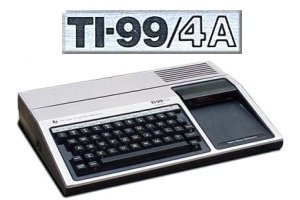
TI-99/4A
A home computer created by Texas Instruments and released in 1981. It was the first home console to feature a 16-bit processor and included a prototype plug-and-play serial bus similar to what would become known as USB.
Overview The TI99/4A shipped on June 12, 1981 with a price tag of 5 and was a successor to the less popular TI99/4 which was released two years earlier at double the price. The TI99/4A made several improvements over its predecessor including added graphics capabilities and lowercase letters, though it was still just the standard ACSII output but smaller.
Â
The TI99/4A is best known for being the first home console to include a 16-bit processor, a full 10 years before the SNES. The system was however limited by the system RAM which created a bottleneck down to 256 bytes. It also offered full Plug and Play capabilities that included not only system peripherals but printers and other home computing devices. Using a prototype high speed serial bus it could be seen as a prototype to today's USB plug-n-play hot-swappable systems.
Technical Specifications CPU: TI TMS9900, 3.0 MHz, 16-bitMemory: 16KB VDP RAM (expandable to 192 KB with the use of YAMAHA V9938)
Video: TI TMS9918A VDP
32 single-color sprites 16 fixed colors Text mode: 40×24 characters
Graphics mode: 32×24 characters
Bitmap mode: 256×192 pixelsMulticolor mode: 64×48 pixels
Sound: TI TMS9919, later SN946243 voices, 1 noise (white or periodic)Voices generate square waves from 110Â Hz to approximately 115Â kHzConsole ROM includes interrupt-driven music list playback